Key Takeaways
- Rare by nature: Mad honey comes from only a few mountain regions of Nepal and is harvested just a couple of times a year.
- Hard to harvest: Honey hunters collect it by hand from wild hives on steep cliffs.
- Testing adds cost: Grayanotoxin levels vary, so every batch needs a lab report.
- Cost per serving matters more: You only need a teaspoon at a time, so one jar lasts a long time.
- Too cheap is a red flag: Very low prices often mean blended or unverified honey.
The first time most people see the price of mad honey, they look twice. A small jar can cost more than a good bottle of wine, and it's fair to wonder why.
Mad honey costs more than regular honey because it's rare, it's harvested by hand from wild cliff hives in Nepal, and each harvest yields only a small amount. Every batch also needs lab testing because the amount of grayanotoxins, the compounds behind its calming effect, changes from harvest to harvest. When you buy a jar, you're paying for all of that, not just the honey.
Mad Honey Price: What to Expect
Mad honey sits at the top end of the honey shelf, well above everyday supermarket honey and in the same premium range as specialty honeys. The exact price depends on the seller, the jar size, and whether the honey comes with proper testing.
Two things are worth knowing before you compare prices:
- Bigger jars cost less per gram: Small jars are great for a first try, but the price per gram drops noticeably as the size goes up. Checking the price per gram is the fairest way to compare sellers.
- Cost per teaspoon is what really counts: Mad honey is taken one teaspoon at a time, so you use far less of it than regular honey. A teaspoon is about 7 grams, which means even a medium jar holds dozens of servings.
So while the price tag looks high, the cost of each serving is much closer to that of a good coffee or a nice cup of loose-leaf tea.
Six Factors That Drive the Price of Mad Honey
Let’s break down the costs behind the price of mad honey.
Only a Few Places Can Produce It
Mad honey only forms where bees can feed on specific species of rhododendron that carry grayanotoxins in their nectar. These grow in a handful of mountain regions, and the most prized honey comes from the Himalayan foothills of Nepal. No farm or factory can recreate these conditions, which caps how much mad honey the world can produce.
A Short Harvest Season
The rhododendrons bloom for only a few weeks a year, and the honey is harvested just a couple of times a year, in spring and autumn. If the weather is poor or the bloom is weak, the harvest is smaller. There's no way to speed this up or add extra harvests when demand grows.
Wild Cliff Harvesting by Hand
Mad honey in Nepal comes from the Himalayan giant honeybee, which builds its hives on sheer cliff faces. Honey hunters climb down handmade rope ladders and cut the honeycomb free with long bamboo poles, often hundreds of feet above the ground. It's slow, skilled, and risky work, passed down through generations.
Small Yields
Each harvest produces only a limited amount of honey, and not every hive produces mad honey. The hives have to be in the right place at the right altitude, close enough to rhododendrons in bloom. Once the honeycomb is collected, the honey still has to be separated, filtered, and prepared, which shrinks the final amount even further.
Lab Testing for Grayanotoxins
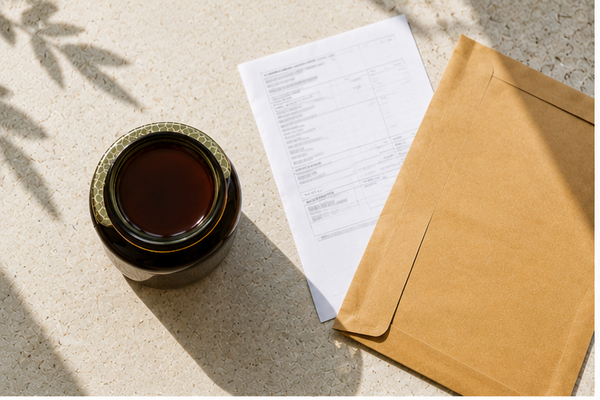
Because grayanotoxin levels change from batch to batch, responsible sellers test every harvest before it's sold. Testing confirms that the honey is genuine and shows how much grayanotoxin it contains, which helps you use it safely. Batch lab reports add real cost, but they’re also one of the clearest signs of a trustworthy seller.
Getting It From Nepal to Your Door
The villages where mad honey is harvested are remote, and the honey often has to be carried down from the mountains before it can be transported anywhere else. From there, it has to be exported from Nepal, imported into the US, packed, and shipped. Every step adds cost, and with a product this rare, careful handling matters.
Why Some Mad Honey Is So Cheap
When mad honey is priced far below what other sellers charge, there's usually a reason. Common ones include:
- It's blended: A small amount of mad honey is mixed with regular honey to stretch it further.
- It isn't mad honey at all: Regular honey is sometimes sold under the mad honey name.
- The origin is vague: A label that only says "Himalayan," with no named region, is hard to verify.
- There's no lab report: Without testing, there's no way to know what's in the jar or how strong it is.
Real mad honey is usually dark and thick, with a distinctly bitter finish and a warm tingle at the back of the throat. If a cheap jar tastes like sweet supermarket honey, that's a warning sign.
Cheap mad honey is also a safety issue. If you don't know how strong a batch is, you can't dose it properly.
What You're Really Paying For
Next to a jar of regular honey, mad honey looks expensive. Once you look at how you use it and what goes into each jar, the price makes more sense.
Think about how you use it. A medium jar of around 250 grams holds roughly 35 teaspoons. If you take a teaspoon a few evenings a week, that jar can last you around three months. Honey also keeps for a long time when it's sealed and stored somewhere cool and dark, so nothing goes to waste.
You're also paying for things you can't see on the label: a rare, wild harvest, the skill of the honey hunters, lab testing, and a traceable origin. For many people, that's what makes mad honey feel special in the first place.
How to Get the Best Value
If you'd like to try mad honey without overpaying, a few simple choices make a real difference:
- Start small, then size up: Try a small jar first to see how you like it. If it becomes part of your routine, larger jars and bundles bring the price per gram down.
- Consider a subscription: If you already know you enjoy it, a mad honey subscription can help you save on every order.
- Check for a lab report: A slightly higher price for tested honey is better value than a cheap jar you can't verify.
- Look for a guarantee: Reputable brands like Real Mad Honey offer a 60-day satisfaction guarantee, so you can try it with less risk.
Final Thoughts
The price of mad honey comes down to a simple fact: there isn't much of it, and getting it from a Himalayan cliff to your kitchen takes a lot of work. Rare flowers, a short season, hand harvesting, small yields, and proper testing all add up.
When you compare jars, look beyond the price tag. A named origin, a lab report, and a fair price per gram tell you far more than a bargain ever will.