Key Takeaways
- A lab report with actual grayanotoxin values is the only check that confirms real mad honey.
- "Himalayan" on a label isn't an origin. Look for a named region in Nepal and a description of how the honey was harvested.
- Real Nepal mad honey is dark, earthy, and noticeably bitter, but the taste on its own doesn’t prove anything.
- A bargain price paired with big promises about how the honey makes you feel is a good reason to walk away.
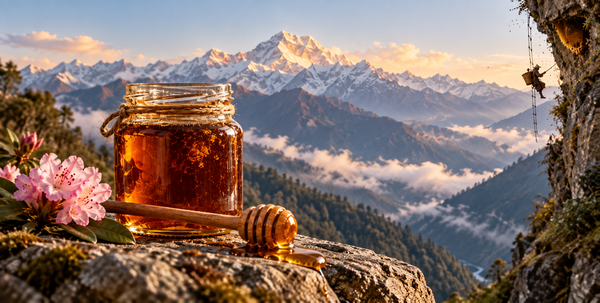
Mad honey comes from wild nests on Nepal's cliff faces, cut down by hand by hunters working from rope ladders. Supply is small and demand keeps growing, which is why so many jars sold online aren’t what they claim to be. Some are ordinary honey with mountain imagery on the label. Others are rhododendron honeys that never contained grayanotoxins in the first place.
Run through the checks below before you order, whether you buy from us or someone else. Most take a few minutes and a careful look at the product page.
How can you tell if mad honey is real?
Real mad honey contains grayanotoxins, natural compounds from rhododendron nectar, and only a lab test can confirm they're present. Before you buy, look for a lab report that covers the batch you're getting, a named harvest region in Nepal, and a seller who can explain how the honey was collected. Color and taste can back that up, but they can't replace testing.
Why So Much Fake Mad Honey Gets Sold
Real mad honey is hard to get. The Himalayan giant honeybee (Apis laboriosa) builds its nests on high, exposed cliffs, and reaching them takes ropes, ladders, and hunters who know the terrain. You can't scale that up the way you can with regular beekeeping.
When supply is tight and prices are high, some sellers cut corners. The fakes you're most likely to run into look like this:
- Relabeled regular honey: Ordinary dark honey, sometimes blended, sold with a "Himalayan" label.
- Rhododendron honey without grayanotoxins: Not every rhododendron species produces grayanotoxins in its nectar. A honey can honestly come from rhododendron flowers and still not be mad honey.
- Listings built on hype: Product pages that say a lot about how the honey will make you feel and almost nothing about where it came from.
The Authentic Mad Honey Buyer Checklist
Here is a checklist that will help you spot authentic mad honey from a mile away.
1. A Lab Report That Matches What You're Buying
Anyone can claim their mad honey is real, but lab testing is the only way to prove it. A seller with authentic mad honey tests it for grayanotoxins and shows you the results. Look for actual measured values and the name of the lab, not just a "passed" stamp or a certificate badge on the product image.
Then check that the report applies to the honey you'll receive. We publish batch-specific lab reports, so you’re not going into the purchase blind.
2. A Named Origin, Not Just "Himalayan"
The Himalayas stretch across several countries and roughly 1,500 miles. A seller who knows their source will tell you more than a mountain range: the region in Nepal, the bee that made the honey, and whether it came from wild cliff nests.
If a listing can't get more specific than "from the Himalayas," treat that as a gap in the story, not a minor detail.
3. Color, Taste and Texture
Real mad honey from Nepal is darker than most supermarket honey. It tastes earthy, with a hint of bitterness, and it's often thicker than a light clover honey. It also varies from harvest to harvest, so no two batches look or taste exactly the same.
Use these as supporting signs only. Dark buckwheat honey can taste earthy too, and color is easy to approximate with a blend. If the jar looks right but there's no report behind it, you still don't know what you have.

4. A Clear, Honest Label
A proper label tells you what's in the jar, where it came from, and who's selling it. Be wary of labels and product pages that lean on medical language or promise specific results. A seller confident in their honey describes the honey itself.
5. A Price That Makes Sense for the Harvest
Wild cliff honey from a small supply costs more to collect, test, and ship to the US than regular honey does. A jar priced like ordinary raw honey is a reason to look harder at everything else on the page. A high price doesn't prove a jar is real, though, so only weigh price alongside the other checks.
How to Read a Mad Honey Lab Report
A lab report can look technical, but you only need to check a few things.
Who Ran the Test
The report should name the laboratory, ideally one the seller doesn't own. If there's no lab name or contact information, you can't confirm the test happened.
When and What Was Tested
The report must clearly state what was tested and when. Look for a test date and a sample or batch reference. Grayanotoxin levels change from harvest to harvest, so a report from years ago says little about the jar you're ordering.
What Was Measured
The report should name the grayanotoxins it tested for. GTX I and GTX III are the ones you'll see most often. A line that just says "pass" or "mad honey confirmed" isn't a test result.
The Actual Values
Each grayanotoxin should have a value with a unit next to it, such as mg/kg. "Not detected" means the lab found none above its detection limit. If a jar sold as mad honey comes with this value, it’s worth asking about.
The Full Document
A cropped screenshot or a badge on a product photo isn't a report. Ask for the complete page if the seller only shows part of it.
A report tells you what's in the honey, not whether it suits you. If you have a heart condition or low blood pressure, or you take medication, talk to your doctor before trying mad honey.
Red Flags in a Mad Honey Listing
- No lab report, or one you can only get by emailing the seller
- "Himalayan" as the only origin detail
- Promises about how the honey will make you feel
- A price close to regular raw honey
- Honey hunter photos that also appear on other sellers' pages
- No company name, contact details, or return policy
One red flag doesn’t make a jar fake. Several on the same page should make you close the tab.
Final Thoughts
Fake mad honey sells because most buyers judge it the way they’d judge any other honey: by the label, the photos and the color in the jar. None of those can tell you whether grayanotoxins are actually there.
A seller with a genuine cliff harvest can back it up: they’ll name the region the honey came from, explain how it was collected, and put a full lab report where you can read it before you pay. When a listing offers mountain photos and vague promises instead, the missing details tell you what you need to know.
Spend a few minutes on the checklist and read the report line by line, and you’ll rule out most fakes before they ever reach your cart.