Key Takeaways
- No official superfood definition: "Superfood" isn't a scientific term, so it depends on what you're looking for.
- Raw honey goodness: Mad honey contains natural antioxidants, enzymes, and plant compounds.
- Something few foods have: Grayanotoxins are found in almost no other food, and they give mad honey its calming effect.
- A little goes a long way: One teaspoon of mad honey is all you need.
- Rare by nature: It's harvested in small amounts in only a few places on Earth.
Blueberries, kale, yogurt, and chia seeds. The list of so-called superfoods keeps growing, and if you've come across mad honey, you might be wondering whether it belongs there too.
There's no official definition of a superfood, but mad honey makes a strong case for itself. It's raw honey with natural antioxidants and enzymes. It contains grayanotoxins, compounds found in almost no other food, which give it a calm, relaxing effect. And people in the Himalayas have valued it for centuries. The one twist is that you enjoy it by the teaspoon.
What Makes a Food a "Superfood"?
"Superfood" is a popular term, not a scientific one. No government agency or research body has set a definition.
However, when people call something a superfood, they usually mean a few things:
- it's rich in beneficial natural compounds
- it has something special that sets it apart from similar foods
- it has a long history of traditional use
- it's often rare or comes from a specific place
Some superfoods tick every box, and some tick only one or two.
What's Inside Mad Honey?
To see whether mad honey can be considered a superfood, let’s start with what's actually in the jar.
Natural Antioxidants and Plant Compounds
Raw honey is more than sugar and water. It also contains small amounts of plant compounds, including flavonoids and phenolic acids, which are types of antioxidants. The bees bring these in with the nectar, so every honey's mix depends on the flowers it comes from.
Mad honey carries compounds from rhododendron nectar, which is part of why it tastes so different from a supermarket honey. It's bold and slightly bitter, with a warm tingle at the back of the throat.
Enzymes and Raw Goodness
Raw honey also keeps its natural enzymes, which bees add while they turn nectar into honey. Most supermarket honey is heated and filtered so it stays runny on the shelf, and that process can strip out much of what makes raw honey interesting.
Grayanotoxins: The Ingredient That Makes It Unique
This is where mad honey stands apart from every other honey and from most other foods. Bees that feed on certain rhododendron flowers carry compounds called grayanotoxins into the honey. In small servings, grayanotoxins act on the nervous system and bring on the calm, relaxed feeling mad honey is known for.
How Mad Honey Measures Up as a Superfood
Here's how mad honey does against the superfood qualities people usually look for.
| Common superfood quality |
How mad honey compares | Verdict |
|---|---|---|
| Contains beneficial natural compounds |
Mad honey contains antioxidants, enzymes, and plant compounds, like other raw honeys | ✅ |
| Has something that sets it apart | Mad honey contains grayanotoxins, which are found in almost no other food | ✅ |
| Has a long history of traditional use | Mad honey has been used for centuries | ✅ |
| Is rare or hard to source | Mad honey comes from small harvests, often from wild cliff hives | ✅ |
| Is nutrient-dense | Mad honey is mostly natural sugar, like all honey | ❌ |
| Is eaten in generous servings | Mad honey is taken one teaspoon at a time | ⚠️ |
Why Serving Size Matters With Mad Honey
Like every honey, mad honey is mostly natural sugar, so it won't replace your vegetables. But you only need about a teaspoon, which has roughly 20 calories, so the sugar barely matters.
Serving size is also where mad honey differs from most superfoods. With blueberries or kale, eating more is part of the point. With mad honey, more isn't better. A teaspoon is enough to feel its effect, and taking too much can cause dizziness, nausea, and low blood pressure. Think of it as a food you enjoy mindfully rather than by the handful.
Stick to the dosage guidance to ensure you can enjoy mad honey safely.
Centuries of Traditional Use
Mad honey's traditional use comes from the Himalayan foothills of Nepal, where communities such as the Gurung have harvested it for generations. Honey hunters climb down handmade rope ladders to reach the hives of the Himalayan giant honeybee, which build on sheer cliffs. The harvest happens only a couple of times a year, and the skills pass from one generation to the next.

In these communities, mad honey has long been treated as a folk remedy. Local healers and elders kept it on hand and gave it out in small amounts (a spoonful of honey or a small piece of honeycomb). It was traditionally used for:
- tiredness and low energy, especially after long days of physical work
- aches and joint pain
- coughs, colds, and sore throats
- an upset stomach
Many saw it as more than food. It came from cliffs high in the mountains and took real risk to collect, so it was often treated as a sacred gift from the mountain, to be used with care and respect. It also had a place in some ceremonies and spiritual practices, and honey hunters still offer prayers before each harvest.
Modern research hasn't tested these traditional uses. But they're part of mad honey's story, and they show how much people have valued this honey for centuries, long before anyone called it a superfood.
How to Try Mad Honey for the First Time
If you're new to mad honey, these four steps will help you get started.
- Check if it's right for you. Mad honey can lower your heart rate and blood pressure, so it isn't suitable for everyone. Skip it if you
- take medication for your heart or blood pressure, or sleep medication and sedatives,
- have a heart condition or low blood pressure,
- are pregnant or breastfeeding,
- are under 18.
- Choose a tested jar. Grayanotoxin levels vary from batch to batch, so look for a seller that publishes lab reports for every batch.
- Pick a quiet moment. Many people save it for the evening as part of their wind-down routine.
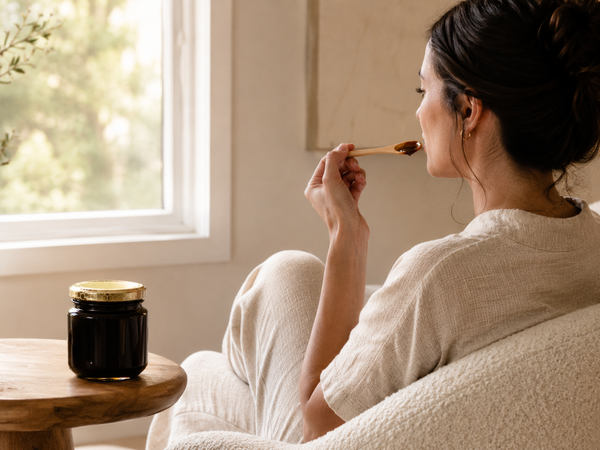
- Start with one teaspoon. Take it on its own or in lukewarm tea, and wait 45 to 60 minutes for the effects to kick in. If you don’t feel the effects, you can take more, but with the first time use, it’s not recommended to exceed the dose of one teaspoon.
Final Thoughts
Mad honey won't sit in a salad bowl next to kale and chia seeds, and that's fine. It makes its case in a different way. It's raw honey with natural antioxidants and enzymes; it contains a compound almost no other food has, and people have treasured it for centuries.
So is mad honey a superfood? By most of the measures people use, it comes close. Just remember that this one works best by the teaspoon.