Key Takeaways
- Different plants: Manuka honey comes from New Zealand's manuka tree. Mad honey comes from rhododendron flowers mainly in Nepal.
- Different compounds: Manuka is known for MGO. Mad honey contains grayanotoxins.
- Different effects: Mad honey has a noticeable relaxing effect. Manuka doesn't.
- Different servings: Manuka works as an everyday honey. Mad honey is taken one teaspoon at a time.
- Different labels: Manuka is graded by MGO or UMF ratings. Mad honey quality is checked with batch lab reports.
Mad honey and manuka honey are both rare, but they're rare for different reasons, and they fill very different roles.
Manuka honey comes from New Zealand's manuka tree, and its value lies in a compound called MGO. People stir it into their morning tea or eat it straight from the spoon, often every day.
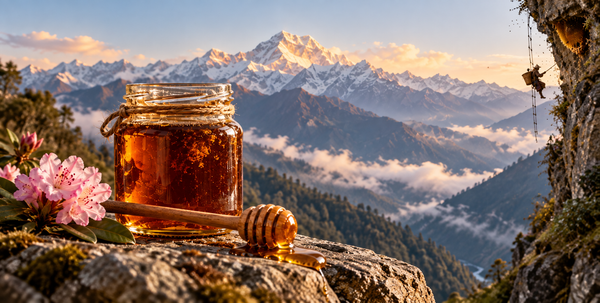
Mad honey is the honey you can feel. It comes from rhododendron flowers in the Himalayan foothills of Nepal and contains grayanotoxins, which give it a noticeable relaxing effect. That's also why you should take it in small, measured servings.
What Is Manuka Honey?
Manuka honey is made by bees that feed on the flowers of the manuka tree (Leptospermum scoparium), a shrub native to New Zealand. Related species also grow in Australia, which is why you'll see Australian manuka on some shelves. The trees flower for only a few weeks a year, and that short season keeps supply limited.
What Makes Manuka Honey Special
Manuka's reputation comes from methylglyoxal, or MGO. Manuka nectar contains a compound called dihydroxyacetone (DHA), which slowly turns into MGO as the honey matures. Regular honey has very little of it.
MGO is best known for its antibacterial activity. All honey is mildly antibacterial, mostly because of small amounts of hydrogen peroxide it produces. That activity is fragile, though, and heat, light, and time can weaken it. MGO holds up much better, which is why manuka keeps its antibacterial activity where other honeys lose theirs.
How People Use Manuka Honey
Most people use manuka the way they'd use any other honey: a spoonful in the morning, stirred into tea or spread on toast.
Part of its reputation comes from medical-grade manuka, which is used in some wound-care products.
What Is Mad Honey?
Mad honey comes from the Himalayas, and it’s made by bees that feed on certain rhododendron flowers. The nectar carries plant compounds called grayanotoxins into the honey, which sets it apart from all other honey, including manuka.
What Makes Mad Honey Special
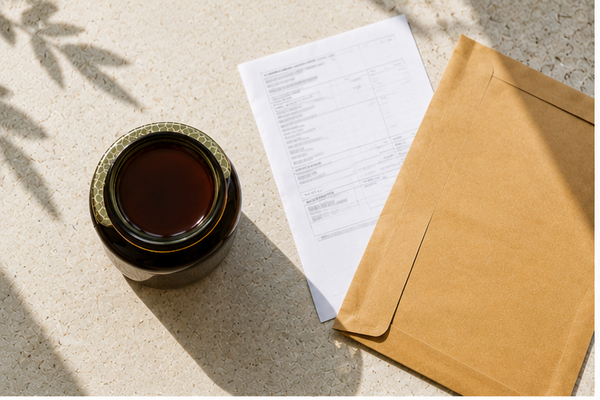
Grayanotoxins act on the nervous system. At small servings, people describe a calm, relaxed feeling, often with a light, pleasant heaviness in the body. Mind that grayanotoxin levels vary from batch to batch, so every jar we sell comes with a published lab report.
How People Use Mad Honey
Mad honey comes with recommended dosage guidance, so people can enjoy its effects while being safe. You should always take it in small, measured servings. Most people start with one teaspoon, wait to see how they feel, and take it on its own or in lukewarm tea.
Key Differences Between Mad Honey and Manuka Honey
Here's how the two compare side by side.
| Mad honey | Manuka honey | |
|---|---|---|
| Source plant | Rhododendron flowers | Manuka tree |
| Origin | Mostly Nepal and Turkey's Black Sea region | New Zealand and parts of Australia |
| Key compound | Grayanotoxins | MGO (methylglyoxal) |
| How quality is checked | Batch lab reports showing grayanotoxin levels | MGO or UMF rating on the label |
| Effects | Calm, relaxed feeling | No reported effects |
| Typical serving | Start with one teaspoon | A spoonful or more, like regular honey |
| Taste | Bold and slightly bitter, with a tingle in the throat | Rich and earthy |
| Price | Higher than regular honey, reflecting the rare harvest and testing | Higher than regular honey, rising with the MGO or UMF grade |
| Who should avoid it | Several groups, including people on heart or blood pressure medication and anyone pregnant. | Babies under 1, like all honey |
Which One Should You Choose?
It depends on what you want from the jar.
- Choose manuka honey if you want a premium everyday honey for your morning tea, toast, or a daily spoonful.
- Choose mad honey if you're curious about its relaxing effect and happy to take it slowly, one small serving at a time.
You can also take both. Plenty of people keep manuka for everyday use and mad honey for the occasional evening. Just don't treat one as a swap for the other. Keep mad honey as its own measured serving instead of stirring it into a spoonful of manuka, so you always know how much you've had.
Final Thoughts
Mad honey and manuka honey may both be premium honeys, but they do very different jobs. Manuka is a rich, everyday honey you can enjoy by the spoonful. Mad honey is a rare honey you take by the teaspoon for the calm it brings.
If you're drawn to mad honey, start with one small serving on a quiet evening, and choose a jar with a published lab report so you know exactly what you're getting.