


White Himalayan Honey
White Himalayan Honey
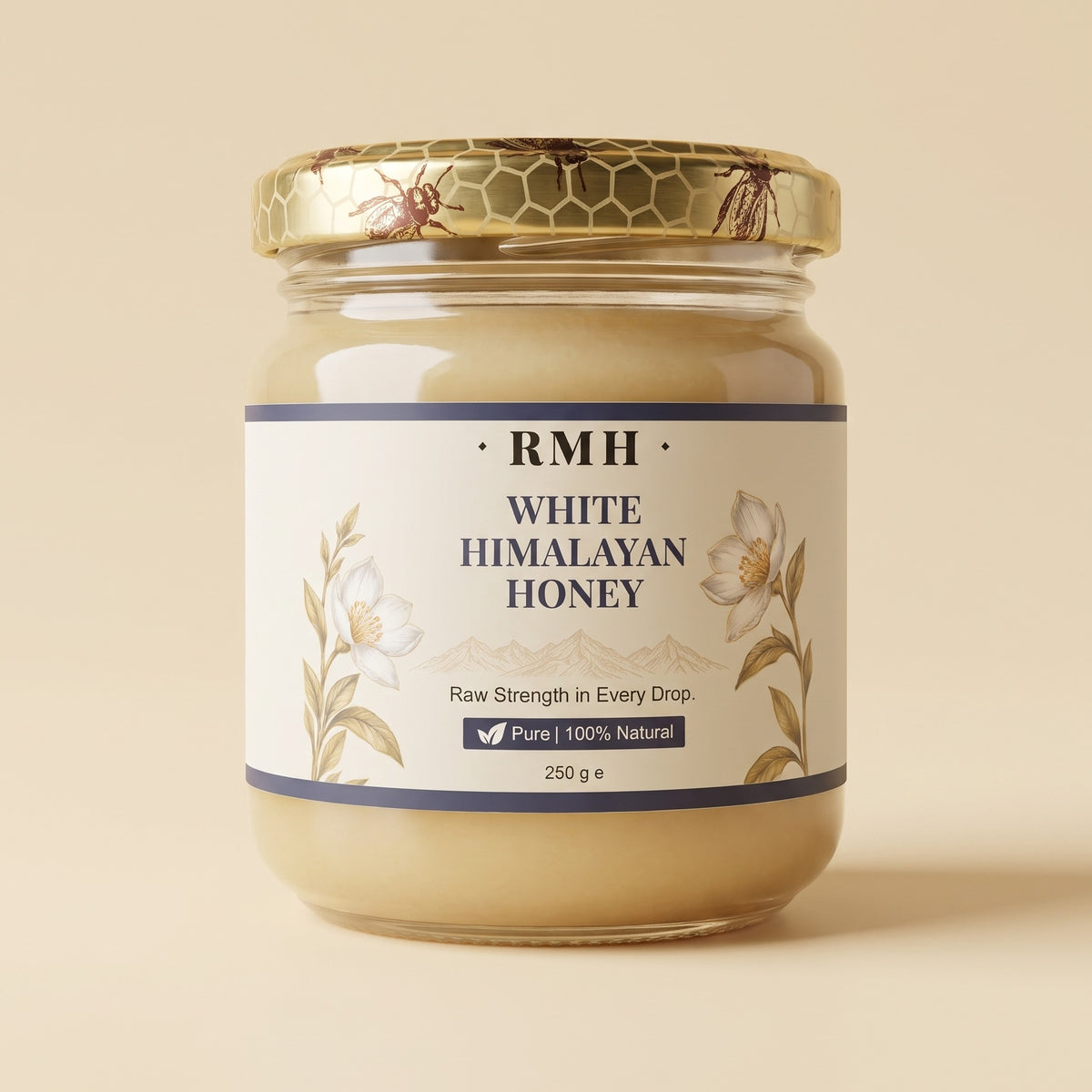
White Himalayan Honey comes from Humla, a remote district in the north-west of the Nepalese Himalaya. Local beekeepers harvest it just once a year, in September and October, from Apis cerana bees.
It is white when it is harvested and gradually turns yellowish over time. One place and one short harvest a year: a honey that is hard to come by.
This is regular honey, not mad honey.

Não foi possível carregar a disponibilidade de retirada.
Goes well with
Not suitable for children under 1 year.

Where it comes from
What is White Himalayan Honey?
White Himalayan Honey comes from the Humla district in Nepal. It is produced by Apis cerana bees kept by local beekeepers, who harvest the honey once a year, between September and October.
Humla lies in the remote north-west of Nepal, high in the Himalaya. One place and one short harvest a year: that is what makes this honey rare. It is white when it is harvested and gradually turns yellowish over time.
Why it's rare
-
Humla, Nepal
Harvested in Humla, a remote district in the north-west of the Nepalese Himalaya.
-
Apis cerana bees
Produced by Apis cerana bees kept by local beekeepers.
-
Once a year
The honey is harvested once a year, between September and October.
-
White at harvest
The honey is white when it is harvested and gradually turns yellowish over time.

The colour
White at harvest, yellowish over time
The honey is white when it is harvested and gradually turns yellowish over time. That change is natural.
Spread it on toast, pancakes or crackers, or stir a spoonful into warm water or herbal tea.