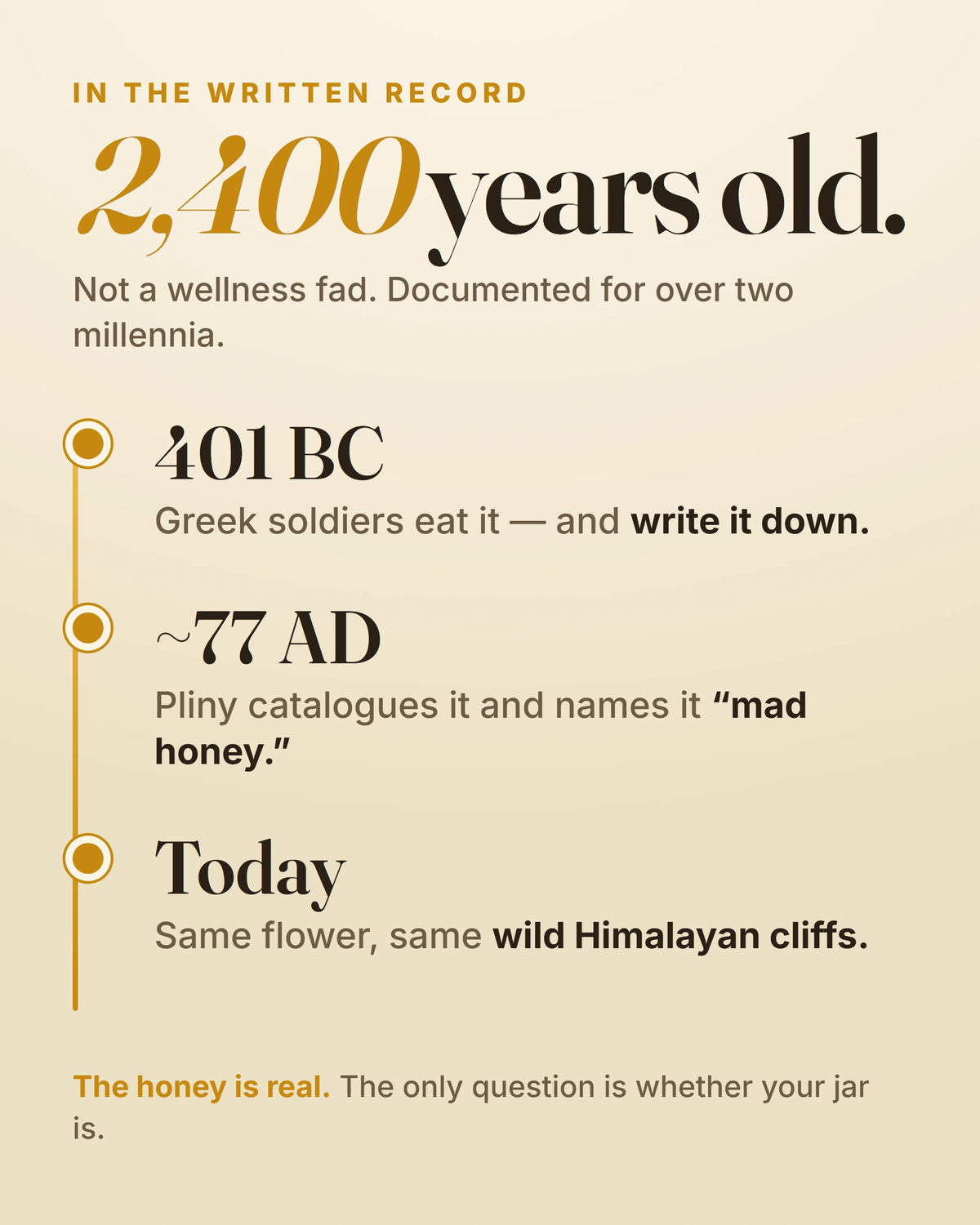

In 401 BC, the Greek general Xenophon marched an army along the Black Sea. His men found wild honeycomb, ate it, and spent one very confused night on the ground — dizzy, unable to stand — before recovering by morning. He wrote it down. Centuries later Pliny the Elder catalogued the same honey and called it “Mad Honey.”
It exists at all because of geography. In a narrow band of the Himalayas, wild rhododendron blooms on high, cold slopes, and one giant cliff-building honeybee forages it. Nowhere else on Earth does that combination happen at scale.
So when someone says it “isn't real,” they're arguing with 2,400 years of written history. The honey is real. The only question worth asking is whether the jar in front of you is.